logo
メッセージを送る
player background
live avator

5s
Total
0
Today
0
Total
0
Today
0
  • What would you like to know?
    Company Advantages Sample Service Certificates Logistics Service
Online Chat WhatsApp Inquiry
Auto
resolution switching...
Submission successful!
良い価格  オンライン

商品の詳細

家へ > 製品 >
CNCの機械部品
>
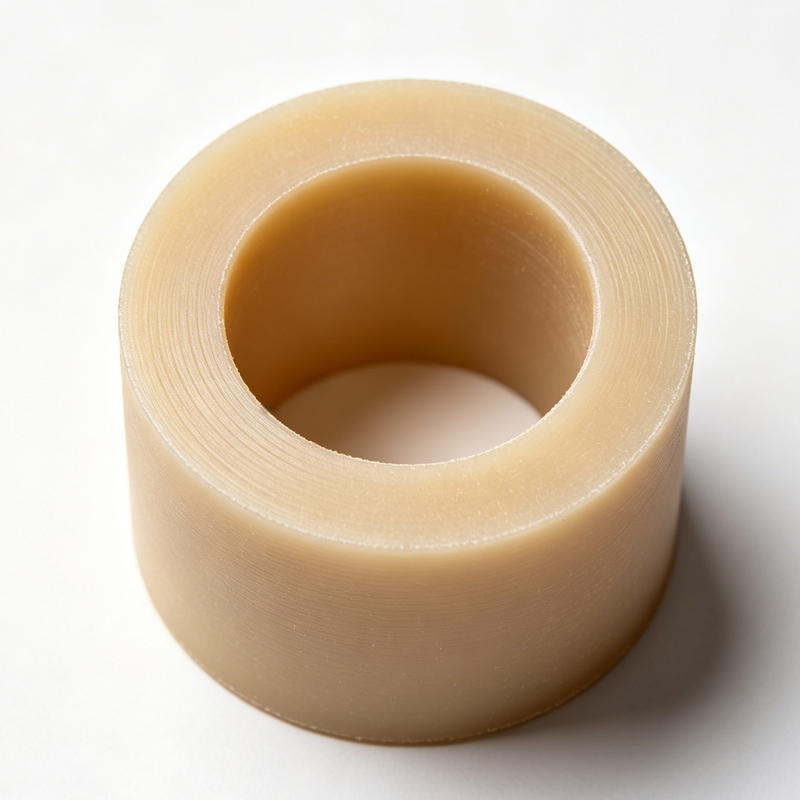
CNC Machined PEEK Bushing with 250C Temperature Resistance, Chemical Inertness, and Electrical Insulation

CNC Machined PEEK Bushing with 250C Temperature Resistance, Chemical Inertness, and Electrical Insulation

詳細情報
製品説明
CNC Machined PEEK Insulation Bushing Sleeve - Custom High-Performance Polymer Components
Material Expertise

PEEK gets specified for all the wrong reasons half the time. Engineers see "high-performance polymer" and "continuous use temperature 250°C" on the data sheet and default to PEEK for every plastic part that needs to be "good." Meanwhile, Nylon would do the job at one-fifth the cost, or Delrin would machine faster and hold tighter tolerances. PEEK is an incredible material, but it's also an expensive one - and you should only use it when you actually need what it offers.

So when do you actually need PEEK? Three scenarios. First, high temperature: if your part sees sustained temperatures above 150°C, most engineering plastics start to lose mechanical properties. PEEK holds up to 250°C continuous. Second, chemical resistance: PEEK is virtually inert to most acids, bases, and organic solvents. Third, high-strength-to-weight ratio in environments where metal would corrode or conduct electricity.

We machine a lot of PEEK at Sinbo Precision, mostly for electrical insulation bushings, bearing sleeves, pump wear rings, and semiconductor handling components. PEEK machines differently from metal - it's abrasive on tooling, it doesn't conduct heat away from the cutting zone (so the tool runs hot), and it has a nasty habit of warping if you remove too much material in one pass. Our machinists have sorted out the cutting parameters over thousands of PEEK parts: sharp polycrystalline diamond (PCD) tooling, moderate spindle speeds, and light depths of cut to manage heat and prevent deformation.

Tight tolerances on PEEK are achievable but require patience. We hold ±0.01mm on bushing bores and ODs, and ±0.005mm on critical sealing surfaces. The trick is accounting for the material's thermal expansion coefficient - PEEK expands roughly 10x more than steel for the same temperature change, so your inspection environment matters.

Key Features
Temperature Resistance

Continuous use up to 250°C, intermittent up to 300°C. Most engineering plastics (Nylon, Delrin, POM) max out at 100-120°C. If your part runs hot, PEEK is often the only polymer option.

Chemical Inertness

Resistant to virtually all acids, bases, hydrocarbons, and organic solvents except concentrated sulfuric acid. No swelling, no degradation, no stress cracking.

Electrical Insulation

Volume resistivity of 10¹⁶ ohm-cm makes PEEK an excellent electrical insulator for bushings, sleeves, and spacers in high-voltage applications.

Machinable to Tight Tolerances

±0.01mm standard, ±0.005mm on critical features. Requires PCD tooling and controlled cutting parameters - our machinists know the process.

Low Moisture Absorption

0.5% at saturation (vs. 8-10% for Nylon). PEEK parts don't swell or lose dimensional stability in humid environments, which matters for precision bushings and bearing sleeves.

Technical Specifications
Product Name CNC Machined PEEK Insulation Bushing Sleeve
Material Options PEEK (natural), PEEK (glass-filled 30%), PEEK (carbon-filled), PEEK (bearing-grade)
Tolerance ±0.01mm (standard), ±0.005mm (critical sealing surfaces)
Max Temperature 250°C continuous, 300°C intermittent
Surface Treatment As-machined (standard), Polished (optional for low-friction)
Certifications ISO 9001:2015, IATF 16949, RoHS, CE, REACH
Lead Time - Prototype 3-7 days
Lead Time - Production 7-15 days
MOQ 1 piece (prototype), 100+ (production)
Origin Dongguan, China
Applications
  • Electrical Insulation: High-voltage bushings, transformer insulation sleeves, busbar insulation spacers, switchgear isolation components, connector insulators
  • Semiconductor: Wafer handling components, cleanroom-grade insulators, CMP retainer rings, chamber components for plasma etching and CVD equipment
  • Oil & Gas: Downhole insulator bushings, valve seat seals, pump wear rings, chemical injection system components
  • Medical & Laboratory: Reusable instrument components, autoclavable bushings, analytical equipment insulators, HPLC system fittings
  • Aerospace: Wire bushings, cable insulation sleeves, bearing isolators, structural insulation spacers
  • Industrial: Pump and compressor wear components, bearing sleeves, seal rings, high-temperature insulating gaskets
Why Choose Sinbo Precision
  • PEEK Machining Expertise: PEEK isn't like machining metal, and it isn't like machining Nylon. It's abrasive on tools, sensitive to heat, and prone to warping if you don't manage chip loads correctly. We've machined thousands of PEEK parts and have the process dialed.
  • PCD Tooling: Polycrystalline diamond cutting tools for PEEK. Standard carbide inserts dull quickly on PEEK's abrasive fillers - PCD tooling holds its edge 10-20x longer, which means consistent surface finish and dimensions across your entire production run.
  • Filled PEEK Experience: Glass-filled PEEK, carbon-filled PEEK, bearing-grade PEEK - each variant machines differently. Glass-filled is more abrasive. Carbon-filled is more brittle. Bearing-grade has different chip characteristics. We've worked with all of them.
  • Thermal Expansion Management: PEEK's CTE is 10x steel. We account for this in our inspection process - parts are measured at controlled temperature, and we'll flag any dimensions on your drawing that could be problematic due to thermal effects.
  • RoHS/REACH Verified: Virgin PEEK material with full material declarations. No regrind, no recycled content unless specifically requested and documented.
  • Fast Prototyping: 3-7 day turnaround on PEEK prototypes. PEEK rod stock is expensive, so we optimize nesting to minimize waste on prototype quantities.
Manufacturing Process
1. DFM Review: Material grade selection (natural, glass-filled, carbon-filled, bearing-grade), geometry optimization for PEEK machining, thermal expansion assessment, and tolerance feasibility analysis.
2. Material Procurement: Virgin PEEK rod stock from certified suppliers. Material certificates with melt flow index, mechanical properties, and thermal properties provided.
3. CNC Machining: Turning for cylindrical bushings and sleeves, milling for custom profiles and flanged components. PCD tooling, controlled cutting parameters, light depths of cut to manage heat.
4. Quality Inspection: CMM dimensional measurement at controlled temperature, surface finish verification, visual inspection for machining marks, thermal stability verification.
5. Optional Finishing: Polishing for low-friction surfaces, deburring for handling safety, cleaning for cleanroom applications.
6. Packaging & Delivery: Individual protective packaging to prevent scratching. Cleanroom packaging available for semiconductor applications. Documentation included.
Frequently Asked Questions
What is your minimum order quantity?
1 piece for prototypes. Production MOQ is typically 100 pieces. PEEK material cost is significant, so we optimize nesting to minimize waste at all quantities.
Can you hold tight tolerances on PEEK?
Yes. ±0.01mm standard, ±0.005mm on critical features. The limitation is thermal expansion - we inspect at controlled temperature and account for CTE in our process.
What's the difference between natural and glass-filled PEEK?
Natural PEEK has higher toughness and elongation. Glass-filled PEEK (30%) has higher stiffness, lower thermal expansion, and better dimensional stability, but is more brittle and more abrasive on tooling. Choose based on whether your application needs flexibility (natural) or rigidity (glass-filled).
Do you use regrind PEEK?
No. We use virgin PEEK rod stock exclusively unless you specifically request regrind for cost reasons. Material certificates provided.
What is the typical lead time?
Prototype: 3-7 days. Small batch: 7-15 days. Mass production: 15-25 days. PEEK stock availability can affect timing on non-standard grades.
Can PEEK replace metal bushings?
In many cases yes - PEEK bushings offer self-lubrication, corrosion immunity, electrical insulation, and weight savings. The trade-off is lower load capacity than bronze or steel. We can help evaluate whether PEEK is suitable for your specific application.